Market Analysis
1. The Rise of the Global Computing Power Economy
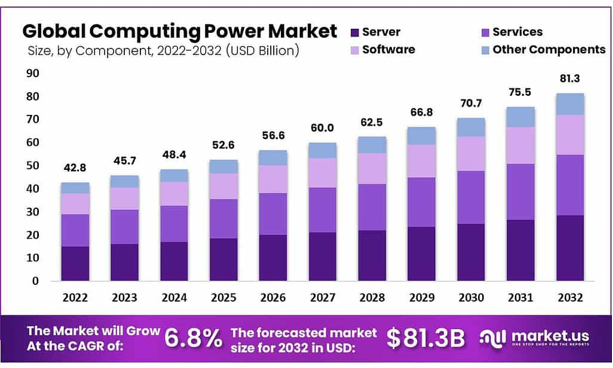
Driven by high-growth scenarios such as AI model inference, blockchain verification, data encryption, and graphics processing, computing power is emerging as the second-generation core resource after data. According to the forecast by authoritative institution IDC, the global scale of intelligent computing power will exceed 4000 EFlops by 2025, with a compound annual growth rate (CAGR) of over 35%. Meanwhile, the demand for trusted computing power continues to rise in decentralized computing (DePIN, Web3-AI), edge node networks, and smart contract infrastructure, creating a vast space for the assetization and financialization of computing power.
2. Deficiencies in Traditional Computing Power Participation Mechanisms
Although "mining" and "computing power economy" are not new concepts in the blockchain space, most existing models suffer from the following structural issues:
Lack of computing power authenticity verification: Users rely solely on data returned by platforms, with no cryptographic signatures or on-chain traceability;
Centralized profit distribution mechanisms: Mining parameters and incentive rules are manually set by project parties, resulting in insufficient transparency;
Low communication security: Data transmission lacks end-to-end encryption protection, making it vulnerable to hijacking, tampering, or monitoring;
Absence of encrypted authentication in identity systems: Node identities can be forged or reused, making it difficult to establish a root of trust in governance and distribution layers.
These problems severely restrict computing power's rights confirmation capabilities, incentive credibility, and ecological sustainability. Particularly in institutional-grade applications, DePIN networks, and decentralized AI, they have become the biggest obstacle to underlying trust.
3. The Accelerated Arrival of the DePIN and Trusted Computing Era
Since 2024, DePIN (Decentralized Physical Infrastructure) and Web3-AI have emerged as mainstream trends in global blockchain infrastructure. Whether it is edge devices, user GPUs, model verification nodes, or algorithm contributors, there is an urgent need for a "trustworthy, verifiable, and tokenizable" computing participation mechanism.
Meanwhile, decentralized communication (e.g., Session, Waku) and encrypted payments (e.g., ZCash, Nocturne) have raised higher requirements for encrypted channels and on-chain trusted identity authentication. The industry is shifting its focus from "computing power scale" to three core standards: "computing power trustworthiness + data encryption + incentive sustainability."
🎯 DF Protocol's Entry Point and Opportunities
DF Protocol was born amid the aforementioned industry transformations. It is neither a new blockchain nor a traditional mining protocol, but rather focuses on solving the underlying structural problem of "inability to cryptographically confirm computing power rights."
Its core advantages include:
Cryptographically defined trust: Through the Diffie–Hellman encryption system, it provides end-to-end communication encryption and unforgeable binding of node identities;
Verifiable computing power: The PoSW (Proof of Secure Work) mechanism combines signatures, timestamps, and random sampling to realize computing power authenticity confirmation and data traceability;
On-chain rights confirmation + contract governance: Smart contracts ensure that all tasks, incentives, and identity mapping processes are tamper-proof and automatically executed;
Scalable structure: Compatible with emerging scenarios such as Web3-AI, privacy computing, and DePIN, with cross-chain adaptability and a post-quantum encryption roadmap.
DF Protocol not only provides individual users with a participation path for "real computing power mining and verifiable output" but also offers system-level interfaces for trusted computing to exchanges, computing power platforms, wallets, and AI projects. It is a crucial link driving the evolution of the next generation of crypto economy toward trustworthiness.
Last updated